
A cerebral palsy diagnosis forces families to confront medical, emotional, and financial challenges that can feel overwhelming.
While many cerebral palsy cases may be unrelated to negligence, some arise from preventable medical mistakes made by health care providers during pregnancy, labor, or early newborn care.
Parents often discover that serious birth injuries were not fully explained at the time, which raises questions about whether different decisions could have protected their child.
In these situations, cerebral palsy negligence claims provide a path for families to understand what went wrong and whether the outcome was avoidable.
Medical malpractice cases involving birth injuries require careful review of medical records, expert opinions, and the sequence of events surrounding the delivery.
Families who suspect wrongdoing may be able to pursue financial compensation that supports long-term therapy, treatment, and daily care needs.
Taking this step does more than assign responsibility.
It gives parents the opportunity to secure resources that can improve their child’s quality of life.
With the right guidance, families can move through the legal process with clarity while focusing on their child’s immediate and long-term wellbeing.
Cerebral palsy (CP) is a group of disorders that impair a child’s ability to move, maintain balance, and control posture.
It is caused by abnormal brain development or damage to the developing brain, often before birth, during the birthing process, or shortly after delivery.
Although the injury is permanent and non-progressive (meaning it doesn’t worsen over time), the effects on a child’s life and function can change as they grow.
Because cerebral palsy results from early brain injury or abnormal development, families and legal professionals must examine the exact timing and nature of the brain damage and whether a health care professional might have prevented it.
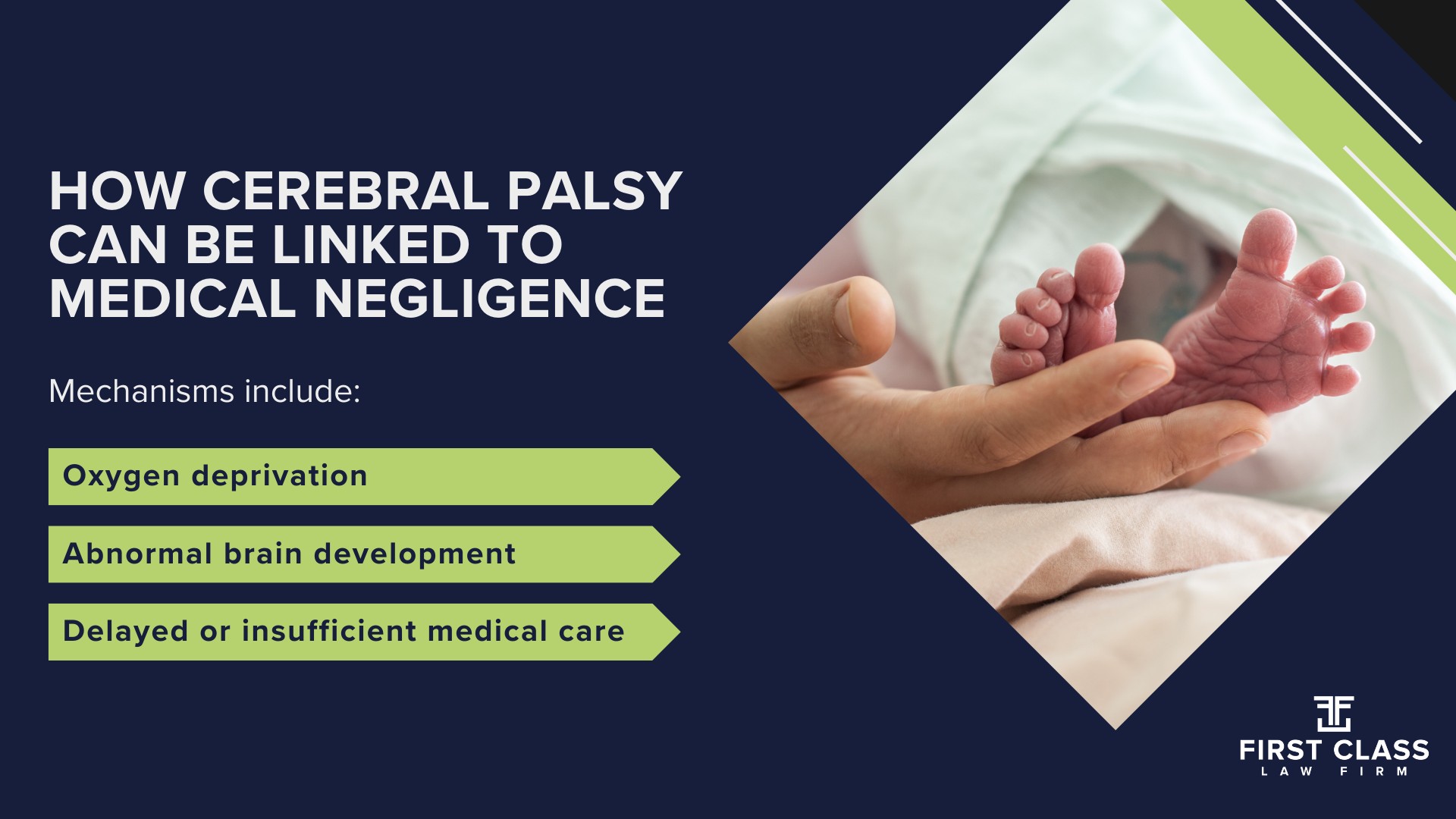
Mechanisms include:
Because cerebral palsy often arises in the context of the birthing process and early neonatal period, families seeking justice must consider whether plausible medical interventions were available but not applied.
For example, if a baby showed signs of fetal distress and a timely cesarean section or other intervention from a health care professional might have prevented brain damage, that fact pattern becomes relevant in a malpractice analysis.
In short: cerebral palsy is not simply “what happens,” but may result from identifiable brain injury linked to prenatal, perinatal or neonatal events.
Any claim must focus on when and how the brain damage occurred and whether medical professionals acted (or failed to act) consistent with accepted standards of care.
Cerebral palsy develops when a child’s brain is injured or fails to form normally during pregnancy, the birthing process, or the early newborn period.
These disruptions affect the areas responsible for movement and coordination, creating long-term challenges with muscle tone, motor control, balance, and posture.
Although some cases are linked to medical errors, many arise from medical events or biological factors that occur independently of negligence, making a clear medical understanding essential.

Doctors generally group the medical causes of cerebral palsy into three broad categories: prenatal, perinatal, and postnatal origins.
Prenatal causes (those occurring before birth) are the most common and may involve genetic mutations, maternal infections such as cytomegalovirus or toxoplasmosis, exposure to toxins, or abnormal brain development.
Perinatal causes arise during labor and delivery, when complications like placental abruption, umbilical cord compression, fetal infection, or oxygen deprivation can injure sensitive brain tissue.
Postnatal causes appear after birth and may include severe jaundice, meningitis, traumatic head injury, or stroke in the first months of life.
When the brain of a newborn is injured or deprived of essential support during the birthing process or immediately afterward, the consequences may include lifelong conditions such as cerebral palsy.
According to the Centers for Disease Control and Prevention (CDC), some of these brain injuries are associated with circumstances that could have been prevented.
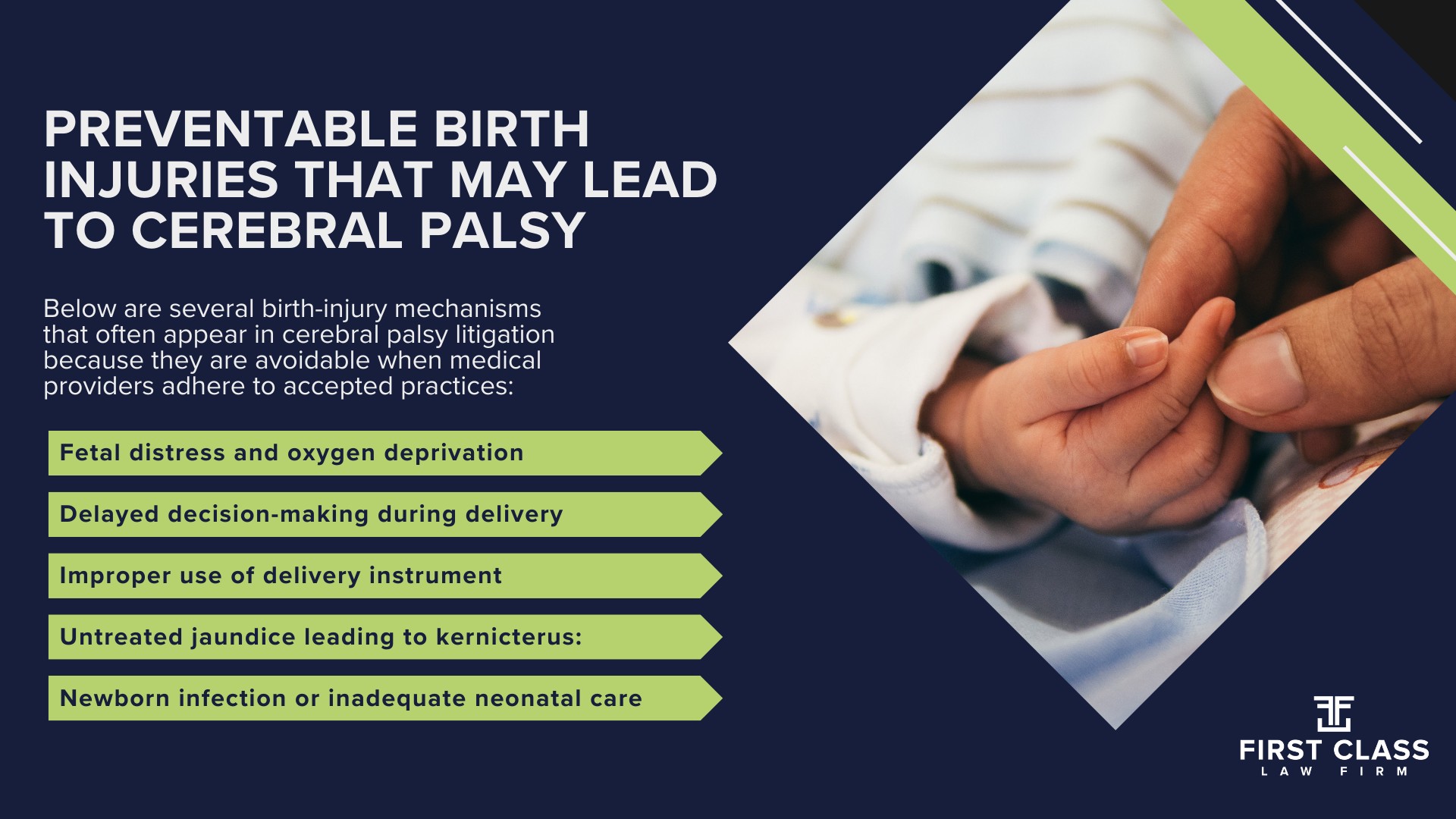
Below are several birth-injury mechanisms that often appear in cerebral palsy litigation because they are avoidable when medical providers adhere to accepted practices:
For families, identifying whether the child’s injury followed one of these paths can help clarify whether the injury was an unfortunate medical outcome or involved a failure by medical providers to act when they should have.
When a child’s cerebral palsy may be linked to preventable errors, families have the right to examine whether a medical malpractice claim filed against a responsible provider or institution is appropriate.
Birth injury cases often involve multiple layers of decision-making, and liability can extend to anyone whose actions or omissions contributed to delayed medical care or improper treatment.
An experienced birth injury attorney evaluates every professional who participated in the pregnancy, labor, delivery, and immediate newborn period.
This includes assessing whether failures in monitoring, communication, or emergency response created conditions that allowed brain injury to develop.
A cerebral palsy case may also involve institutional responsibility when hospital systems fail to provide safe staffing levels, appropriate equipment, or adequate supervision.
Because the causes of cerebral palsy can span prenatal, perinatal, and neonatal periods, determining accountability requires a precise review of each provider’s role.
Understanding who may be held liable allows families to build a clear picture of what went wrong and why their child suffered preventable harm.
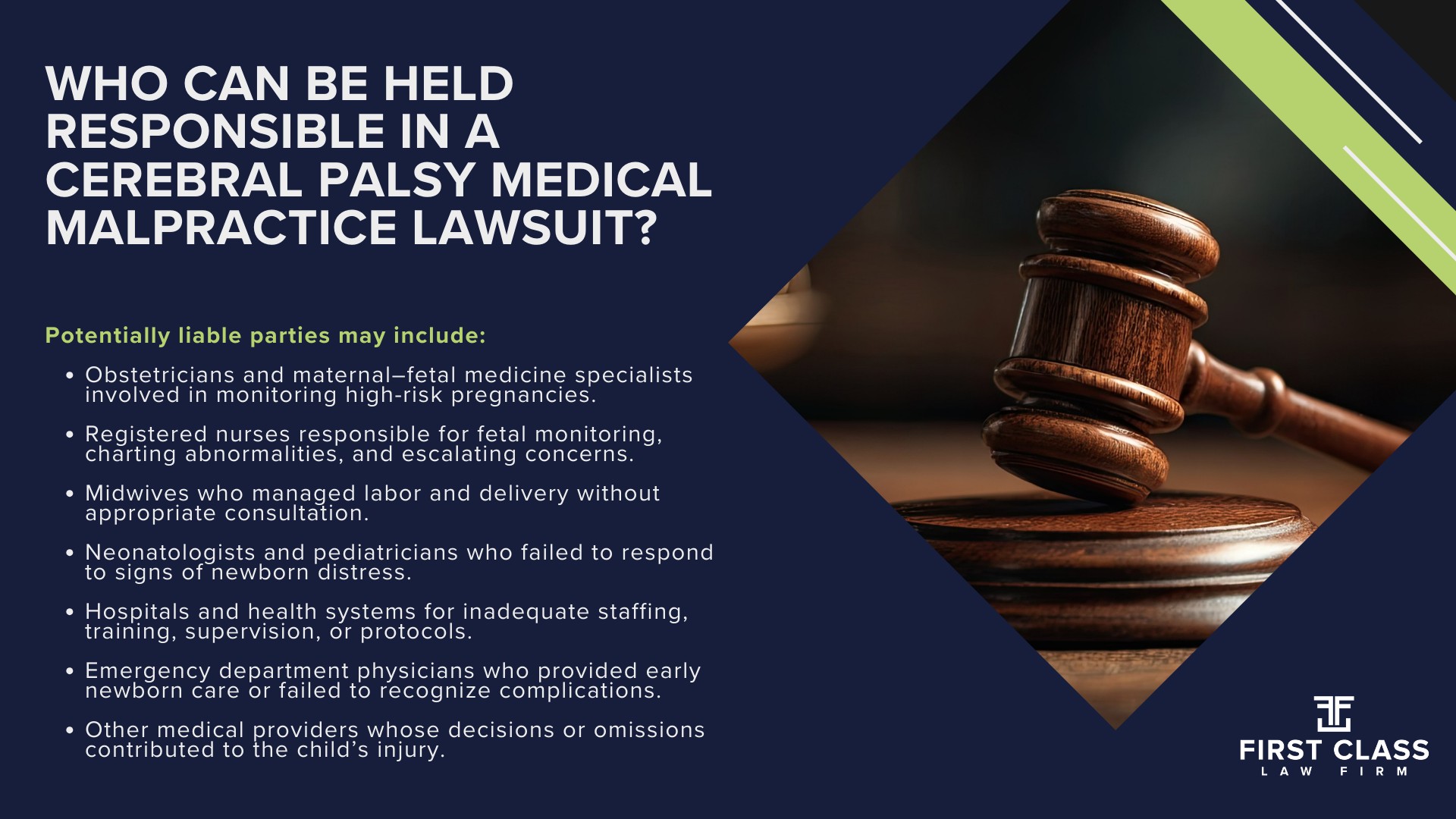
Potentially liable parties may include:
Proving medical malpractice in a cerebral palsy lawsuit requires a clear connection between the child’s injury and the actions or omissions of the medical professionals involved, and Georgia’s medical malpractice laws set a high bar for this type of proof.
Families pursuing cerebral palsy compensation must show that accepted standards of care were not followed at critical moments before, during, or after birth.
Because birth injury claims rely heavily on expert analysis, the legal team must secure qualified medical specialists who can explain what should have been done and how the failure to act led to brain injury.
Georgia law also requires detailed documentation and sworn expert affidavits early in the case, making prompt legal review essential.
These requirements shape the foundation of any civil lawsuit and guide the investigation that follows.
In any Georgia cerebral palsy malpractice case, the standard of care defines what a reasonably competent health care professional should have done when faced with the same clinical circumstances.
Obstetricians, nurses, midwives, and neonatal specialists each have well-established responsibilities during pregnancy, labor, delivery, and immediate newborn care, including interpreting fetal monitoring strips, identifying fetal distress, responding to maternal complications, and initiating timely intervention when a baby shows signs of oxygen loss.
A breach occurs when those expected actions are not taken or are carried out incorrectly, creating conditions that allow preventable brain injury to occur.
Examples include failing to escalate abnormal fetal heart rate patterns, delaying a necessary cesarean section, overlooking maternal infection, or providing inadequate resuscitation after birth.
Establishing breach requires a detailed examination of medical records, documentation gaps, staff communication logs, and expert testimony from practitioners in the same field.
These experts compare what happened to what competent providers are trained and obligated to do, illustrating where the breakdown occurred and how it contributed to the child’s cerebral palsy.
By defining the precise point of failure, families and their attorneys can begin building a clear narrative of responsibility.
Causation is often the most technically demanding element of a cerebral palsy lawsuit because it requires showing that a specific act of negligence directly led to the child’s brain injury.
In Georgia, this step must be supported by expert testimony capable of explaining how the injury occurred and why it was preventable under proper medical care.
Attorneys and medical specialists review fetal monitoring data, cord blood gases, delivery timelines, neonatal records, and imaging studies to determine when the brain damage began and whether timely intervention would have changed the outcome.
This analysis often focuses on periods of oxygen deprivation, untreated infection, unmanaged maternal complications, or delays in responding to fetal distress.
The goal is to differentiate unavoidable medical events from harm caused by substandard decisions that allowed injury to progress.
When experts can clearly connect these failures to the resulting cerebral palsy, the legal claim gains the foundation needed to move forward.
In Georgia, families pursuing cerebral palsy birth injury claims must act quickly because most medical malpractice lawsuits must be filed within two years of the date the injury occurred or should reasonably have been discovered.
Beyond that, Georgia’s law imposes a hard cutoff, a five-year statute of repose, meaning no medical malpractice claim can be filed more than five years after the negligent act or omission itself occurred.
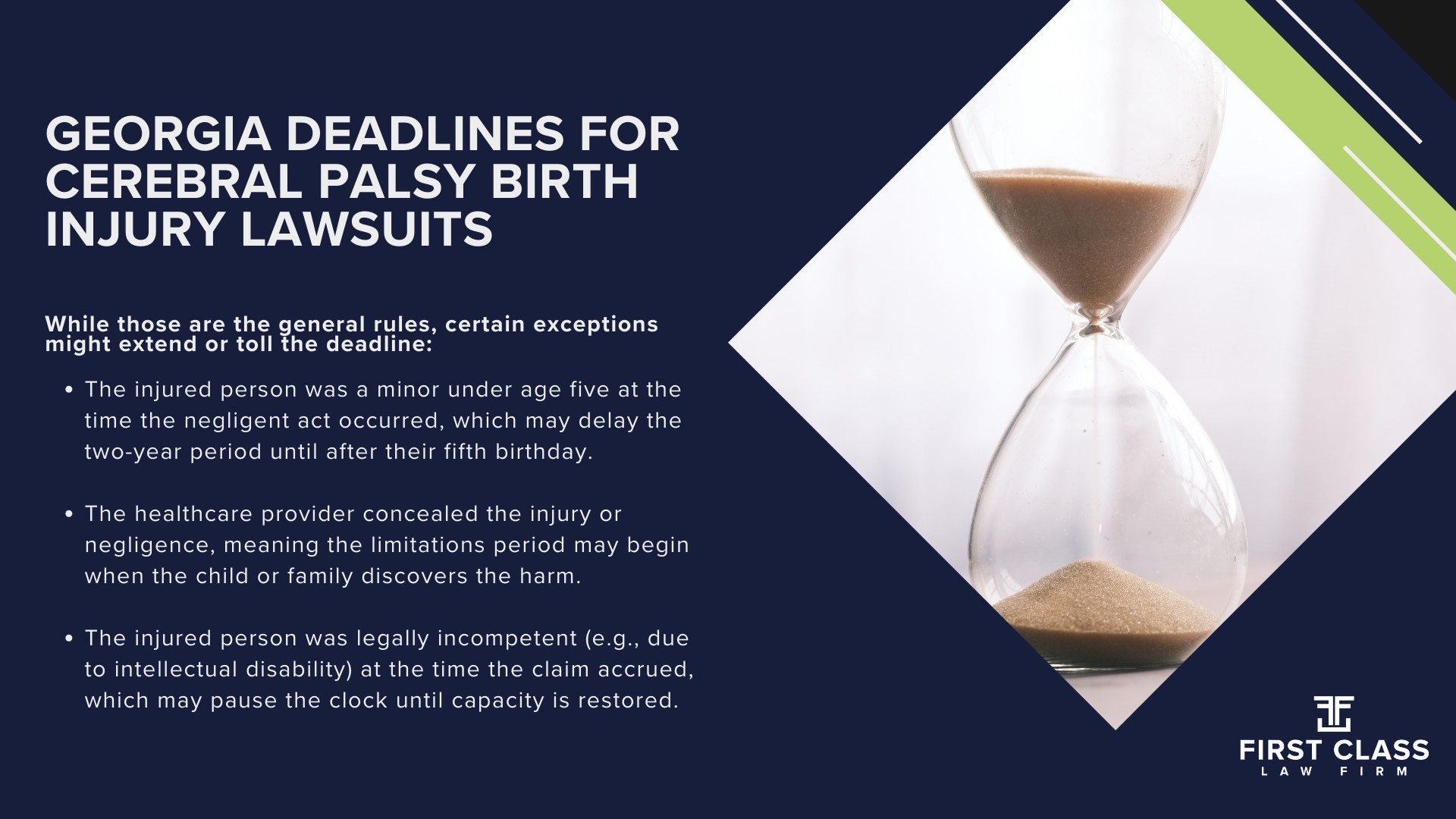
While those are the general rules, certain exceptions might extend or toll the deadline:
Even though these exceptions exist, they are narrow and complex.
Families should not rely on them as a substitute for timely legal action; starting the claim process as soon as possible preserves critical rights, evidence, and access to compensation.
Families may qualify for a cerebral palsy lawsuit if evidence shows that medical errors during pregnancy, labor, delivery, or early newborn care contributed to their child’s condition.
A birth injury lawyer evaluates medical records, fetal monitoring data, delivery timelines, and neonatal treatment to determine whether substandard decisions or delayed responses played a role in the brain injury.
Not every diagnosis is linked to negligence, but preventable events such as untreated infection, ignored fetal distress, or delayed intervention may form the basis for legal action.
Parents who suspect wrongdoing can meet with an attorney to discuss whether their circumstances meet the legal requirements to file a cerebral palsy case.
These evaluations focus on the timing of the brain injury, what the medical team should have done, and whether different choices could have changed the child’s outcome.

When negligence is supported by expert review, families may seek compensation for long-term medical care, therapy, mobility equipment, and other essential needs.
An attorney also considers Georgia’s filing deadlines and procedural requirements to determine eligibility.
Speaking with a lawyer early gives families the best chance to understand their rights and move forward confidently.
Strong evidence is essential in determining whether a child’s cerebral palsy is connected to medical negligence or unavoidable medical complications.
Attorneys and medical experts rely on detailed documentation to establish when the brain injury occurred, how it developed, and whether proper care would have prevented it.
The more complete the record of the child’s treatment and clinical history, the clearer the picture becomes for evaluating responsibility.
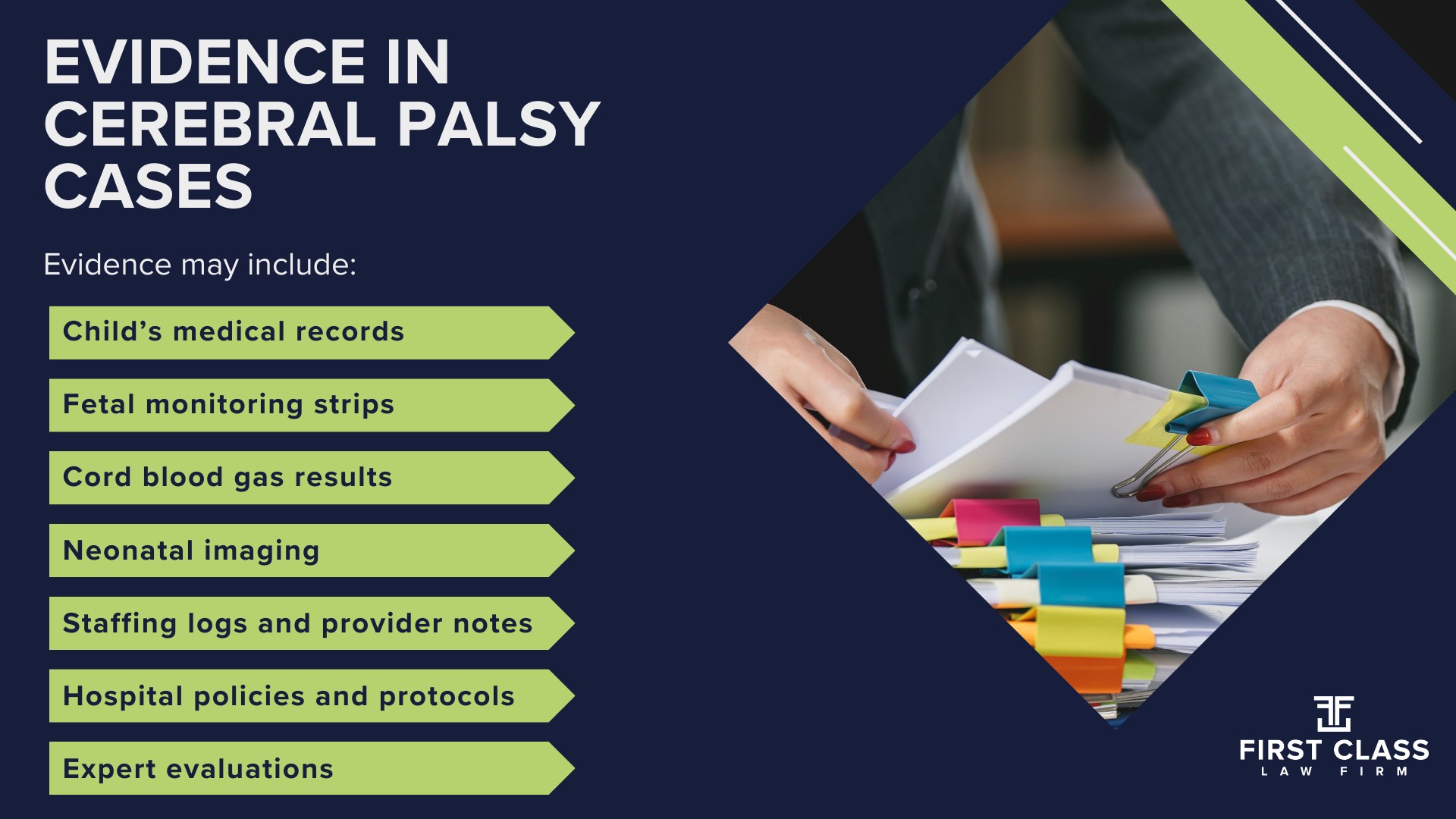
Evidence may include:
An Affidavit of Merit in a Georgia medical malpractice lawsuit is a sworn statement from a qualified medical expert that must accompany the initial filing of the case.
Georgia law requires this affidavit to outline at least one specific act of negligence committed by the defendant and explain how that act violated the applicable standard of care.
The expert must practice in the same field as the provider being sued and be able to testify competently about the medical issues involved.

Without this affidavit, a medical malpractice lawsuit can be dismissed before it ever reaches discovery.
For families pursuing a cerebral palsy claim, securing a strong Affidavit of Merit is a critical first step in building a credible case.
Damages in a medical malpractice lawsuit represent the financial and personal losses a family experiences because of negligent medical care.
In cerebral palsy cases, these damages cover the extensive costs associated with a child’s cerebral palsy treatment, long-term care needs, and the impact the condition has on daily life.
Medical bills, therapy expenses, assistive equipment, and home modifications are often central components of these claims.
Because cerebral palsy lawsuit settlements consider both current and future needs, they aim to provide resources that support the child across their lifetime.
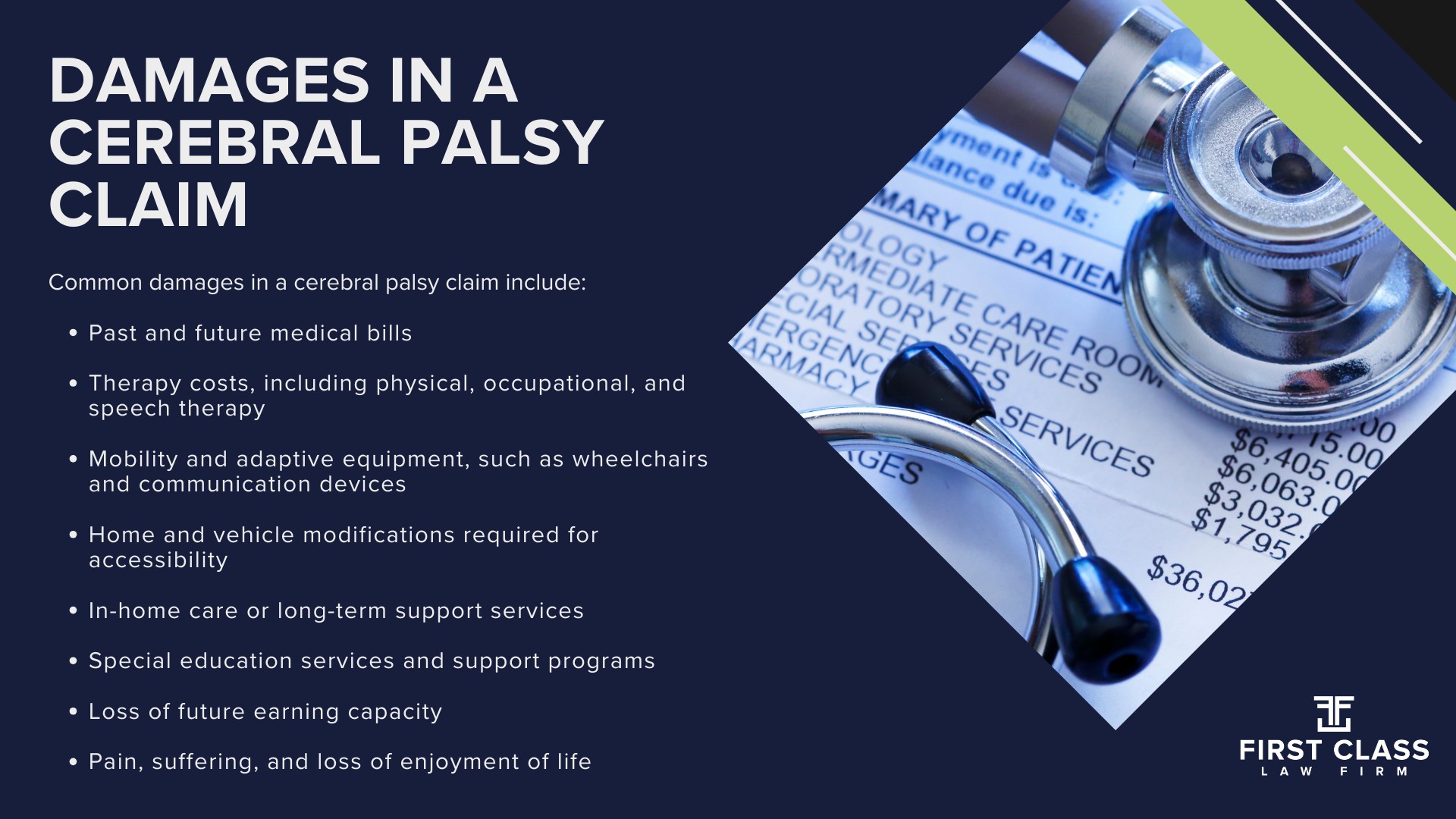
Common damages in a cerebral palsy claim include:
Families facing the challenges of a cerebral palsy diagnosis deserve answers, clarity, and meaningful support.
When questions arise about whether preventable medical errors played a role in a child’s condition, a focused legal review can help uncover what happened and what options exist moving forward.
An Atlanta cerebral palsy lawyer from First Class – The Atlanta Personal Injury Law Firm can evaluate the medical records, consult with experts, and determine whether your family has a path to compensation.
If negligence contributed to your child’s injuries, legal action may provide the resources needed for long-term care, treatment, and stability.
If you believe your child’s cerebral palsy may be tied to medical mistakes, reach out today for a confidential consultation and learn how First Class can help you pursue justice.
Call us or use the chat feature on this page to find out if you qualify for a cerebral palsy lawsuit.