


How are Damages Calculated in Personal Injury Cases?

Written By:
Picture of Nathan Whittenburg

Nathan Whittenburg

Owner & Attorney - Atlanta Personal Injury Law Firm

This article has been written and reviewed for legal accuracy and clarity by the team of writers and legal experts at Atlanta Personal Injury Law Firm and is as accurate as possible. This content should not be taken as legal advice from an attorney. If you would like to learn more about our owner and experienced Georgia personal injury lawyer, Nathan Whittenburg, you can do so here.

Atlanta Personal Injury Law Firm does everything possible to make sure the information in this article is up to date and accurate. If you need specific legal advice about your case, contact us. This article should not be taken as advice from an attorney.

How a Lawyer Calculates Damages in Personal Injury Claims

On this page, we’ll discuss how damages in personal injury cases are calculated, what damages in personal injury cases typically include, the process by which a personal injury lawyer assesses and calculates damages, and much more.

The Calculation of Personal Injury Damages Explained

The concept of damages in personal injury claims refers to the monetary and non-monetary costs associated with an accident.

These damages are typically divided into two main categories: economic and non-economic.

Economic damages include tangible costs like medical bills, lost wages, and rehabilitation expenses that can be quantified and directly linked to the accident.

Non-economic damages encompass less tangible losses, such as pain and suffering, emotional distress, and loss of enjoyment of life, which are subjective and more challenging to measure.

A personal injury lawyer meticulously assesses and calculates both economic and non-economic damages by gathering comprehensive medical records, evaluating the accident’s impact on the victim’s life, and consulting relevant experts.

A comprehensive calculation of damages is vital, as it provides victims with compensation that reflects both immediate losses and future needs while considering the accident’s lasting impact on their quality of life.

An experienced personal injury lawyer will assess damages by calculated related expenses, addressing the losses incurred, and evaluating the long-term impact of the injury on the client’s lifestyle and earning capacity.

How are Damages Calculated in Personal Injury Cases; Personal Injury Damages; Damages in a Personal Injury Case; What are the Different Types of Damages in Personal Injury Cases; Economic Damages; Non Economic Damages; How Does a Personal Injury Attorney Assess Damages; Example_ Assessing and Calculating Personal Injury Damages in a Car Accident Case (2)

If you or a loved one were injured at no fault of your own, you may be eligible to file a personal injury lawsuit and seek compensation.

Contact the Atlanta Personal Injury Law Firm today for a free consultation.

You can also use the chatbot on this page for a free case evaluation and to get in touch with us.

Nathan Whittenburg, our founder and experienced Atlanta Personal Injury Lawyer, helps people who have been injured in car accidents and other motor vehicle accidents across the state of Georgia.

Table of Contents

What are the Different Types of Damages in Personal Injury Cases?

In personal injury cases, damages represent the monetary compensation awarded to victims to address their losses and suffering resulting from an accident.
What are the Different Types of Damages in Personal Injury Cases

Damages are assessed based on the severity of injuries and the impact on the victim’s life, applying principles of fairness to restore the injured party financially and emotionally.

The concept of damages aims to provide a measure of relief and accountability that aligns compensation with the nature and extent of the harm endured.

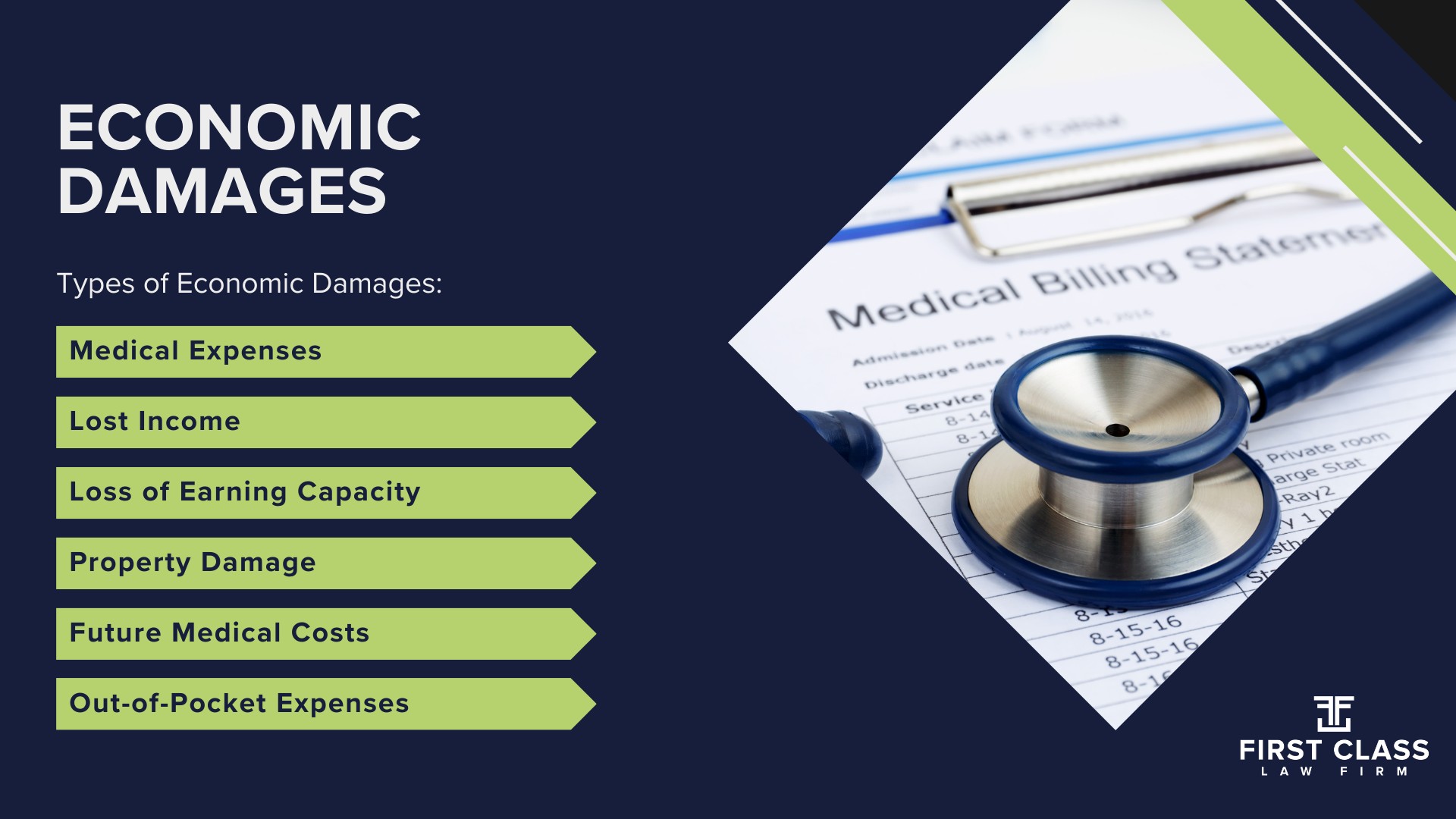
Economic Damages

Economic damages, also known as “special damages”, are the tangible financial losses a victim incurs due to an accident, covering costs directly tied to injuries and their impact on daily life.

Economic damages can be easily quantified and documented, providing a clear basis for compensation in personal injury claims.
What are the Different Types of Damages in Personal Injury Cases; Economic Damages

Types of Economic Damages:

  • Medical Expenses: Costs for hospital visits, surgeries, medications, and rehabilitation.
  • Lost Income: Wages lost due to time off work for recovery.
  • Loss of Earning Capacity: Reduced ability to earn future income because of long-term disabilities.
  • Property Damage: Repairs or replacement costs for vehicles and personal items.
  • Future Medical Costs: Anticipated expenses for ongoing treatments, therapies, or surgeries necessary due to serious injuries.
  • Out-of-Pocket Expenses: Transportation, childcare, and other expenses incurred due to the injury.

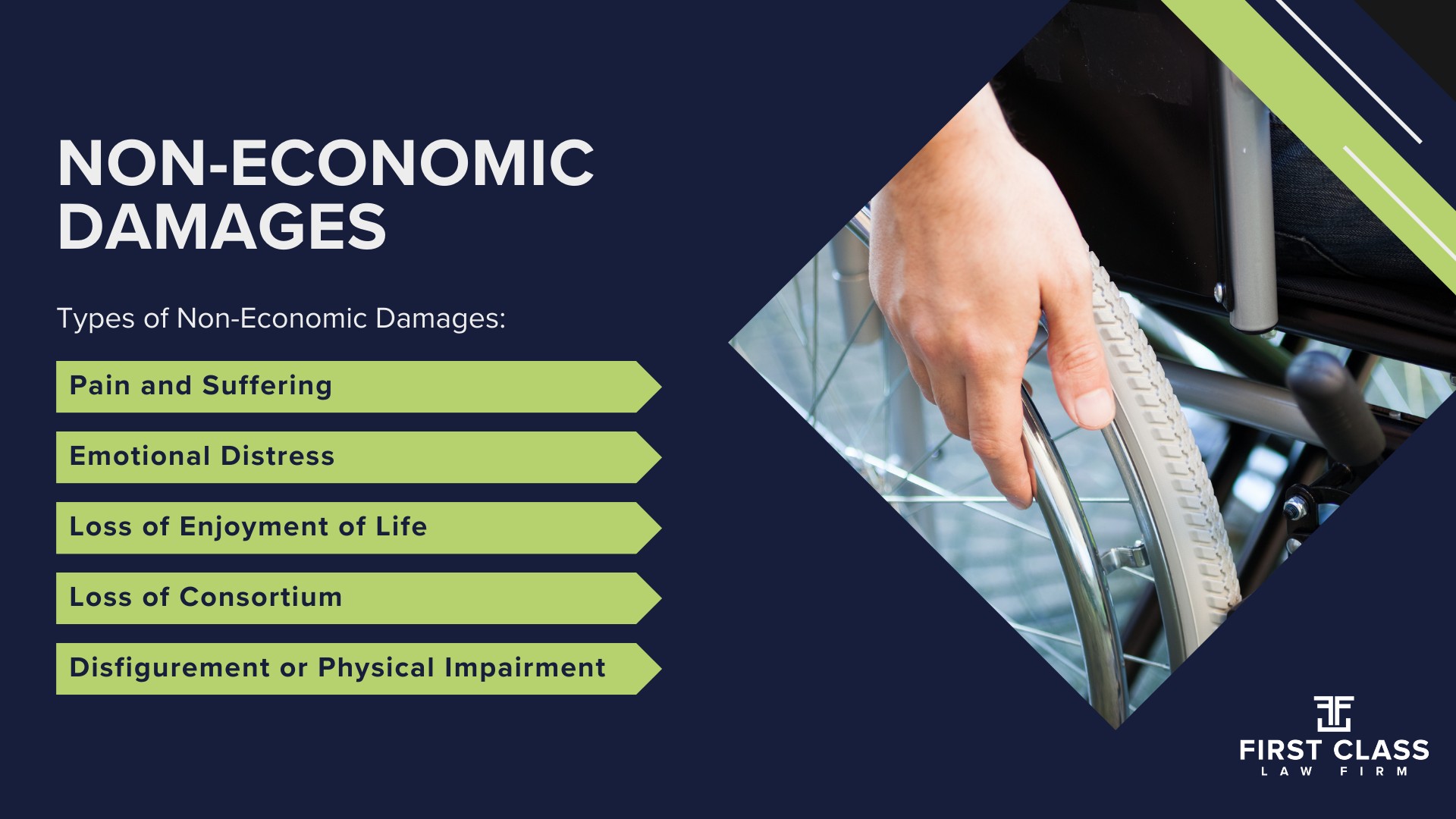
Non Economic Damages

Non-economic damages, also known as “general damages”, represent the intangible or non-monetary losses a victim suffers following an accident.

Non-economic damages address the ways in which the injuries affect a victim’s quality of life and personal well-being beyond financial losses.
What are the Different Types of Damages in Personal Injury Cases; Economic Damages; Non Economic Damages

Types of Non-Economic Damages:

  • Pain and Suffering: Physical pain and discomfort resulting from injuries.
  • Emotional Distress: Psychological effects like anxiety, depression, and post-traumatic stress disorder (PTSD).
  • Loss of Enjoyment of Life: Reduced ability to participate in hobbies, recreational activities, or other pleasures.
  • Loss of Consortium: Impact on relationships with spouses or family members due to injuries.
  • Disfigurement or Physical Impairment: Permanent changes in appearance or bodily function affecting daily activities

Compensatory Damages vs. Punitive Damages in Personal Injury Cases

Compensatory damages in personal injury cases focus on addressing the financial and personal losses suffered by victims due to an accident, and include both economic damages and non-economic damages, which are explained above.

The goal of compensatory damages is to help victims recover financially and emotionally by covering their immediate and long-term needs.

Punitive damages, on the other hand, are intended to punish a defendant for particularly extreme or gross negligence, serving as a deterrent to prevent similar conduct in the future.

Punitive damages go beyond compensating the victim and are awarded to make an example out of egregious conduct and hold the responsible party fully accountable.

However, punitive damages are rarely awarded because they require clear and convincing evidence that the defendant acted with intentional misconduct or complete disregard for safety.

Courts carefully assess the circumstances to ensure this level of negligence is present before deciding to grant punitive damages.

How Does a Personal Injury Attorney Assess Damages?

A personal injury attorney assesses damages by thoroughly analyzing the nature and extent of the victim’s injuries, financial losses, and overall impact on quality of life.

Personal injury lawyers examine medical records, wage statements, and expert opinions to understand the immediate and future expenses related to treatment and rehabilitation.

The attorney and their legal team also considers non-economic factors like pain and suffering, emotional distress, and reduced enjoyment of life, using these elements to establish a comprehensive claim.

Consulting experts helps calculate long-term losses like diminished earning capacity and the cost of future medical care.

A detailed assessment provides a strong foundation for negotiations with insurance companies and builds a compelling case if the matter goes to trial.

Assessing damages is conducted on a case-by-case basis to accurately reflect each victim’s unique injuries, financial losses, and emotional impacts arising from the specific circumstances of their accident.
What are the Different Types of Damages in Personal Injury Cases; Economic Damages; Non Economic Damages; How Does a Personal Injury Attorney Assess Damages

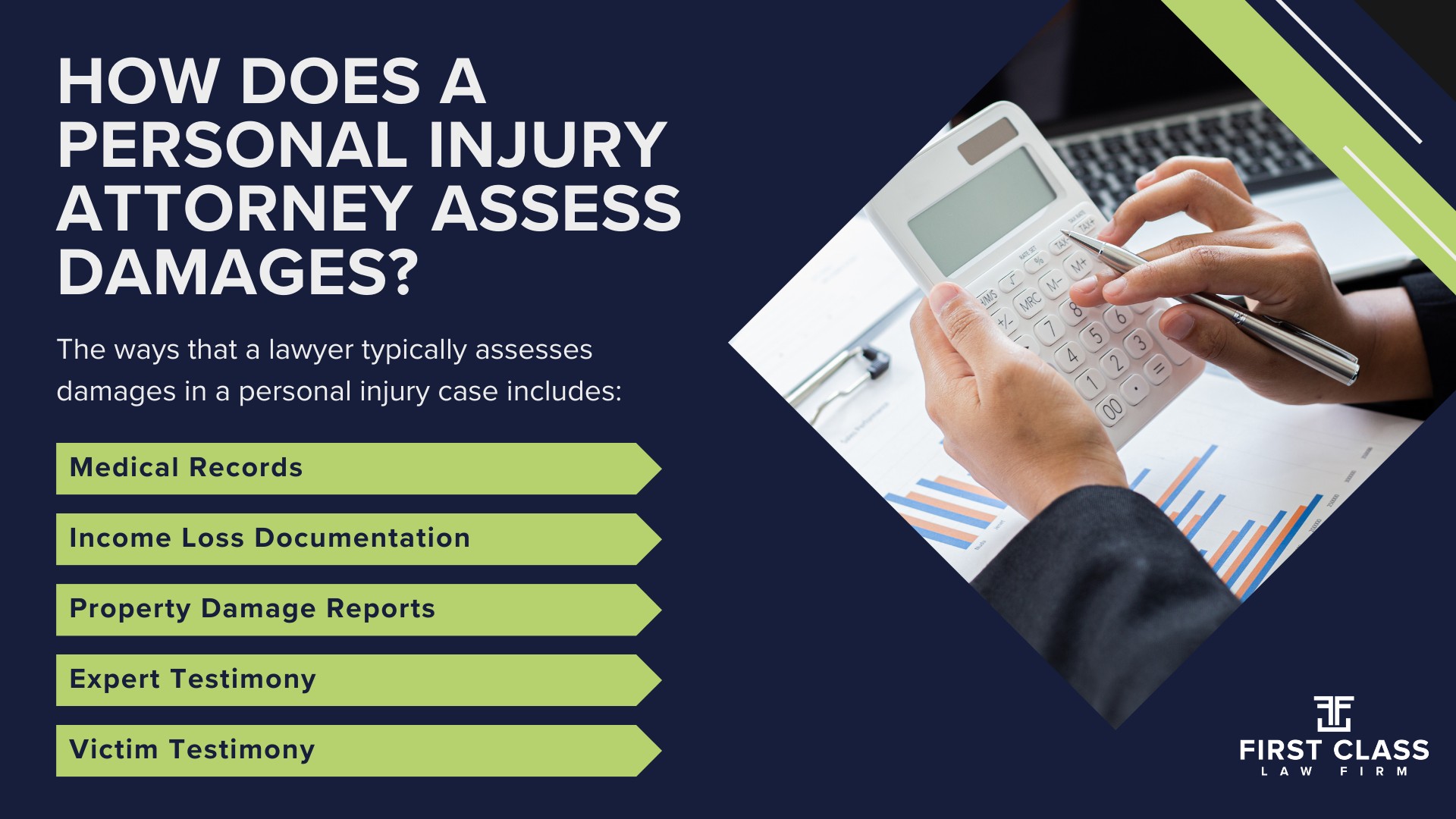
The ways that a lawyer typically assesses damages in a personal injury case includes:

  • Medical Records: Reviewing treatment history and obtaining expert opinions on future care needs.
  • Income Loss Documentation: Evaluating wage statements and employment history to estimate lost earnings and diminished earning capacity.
  • Property Damage Reports: Analyzing vehicle and personal property damage for repair or replacement costs.
  • Expert Testimony: Consulting economists, doctors, and therapists to understand the long-term impact of injuries.
  • Victim Testimony: Discussing the accident’s impact on daily life to quantify non-economic damages like pain and suffering.

Methods Used by Lawyers to Calculate Personal Injury Damages

Lawyers use various methods to calculate personal injury damages based on the nature of the injuries and their impact on the victim’s quality of life.

The multiplier method is a common approach for determining non-economic damages, multiplying the total economic losses by a factor that reflects the injury’s severity.

Another method, known as the “per diem” approach, assigns a daily rate to the pain and suffering endured, applying this rate over the expected recovery period.

Attorneys also consult with experts and analyze case precedents to ensure their calculations align with previous similar claims.

Types of Methods Used:

  • Multiplier Method: Multiplies economic losses by a factor representing injury severity to calculate non-economic damages.
  • Per Diem Method: Assigns a daily rate to pain and suffering, multiplying it by the anticipated recovery period.
  • Expert Consultation: Involves specialists, such as medical professionals and economists, to estimate long-term costs.
  • Case Precedent Analysis: Reviews similar cases to identify compensation trends and ensure calculations are reasonable.

Example: Assessing and Calculating Personal Injury Damages in a Car Accident Case

In this example, we explore a hypothetical personal injury case where an individual was T-boned at an intersection through no fault of their own.

The collision resulted in broken bones, whiplash, and a significant back injury, causing the injured person to miss a significant amount of work.
What are the Different Types of Damages in Personal Injury Cases; Economic Damages; Non Economic Damages; How Does a Personal Injury Attorney Assess Damages; Example_ Assessing and Calculating Personal Injury Damages in a Car Accident Case (2)

The Car Accident and Aftermath

Sarah was driving through a green light at an intersection when another car, failing to stop at a red light, T-boned her vehicle on the driver’s side.

Immediately after the accident, emergency services were called, and Sarah was transported to the hospital.

Her injuries were diagnosed as multiple fractures in her left arm, severe whiplash, and a lumbar spine injury.

Due to the nature of her injuries, Sarah was unable to return to work for two months and required extensive medical treatment including surgery, physical therapy, and ongoing pain management.

The Role of a Personal Injury Lawyer

After stabilizing her medical situation, Sarah contacted a car accident lawyer to help manage her insurance claims and seek fair compensation.

The lawyer played a crucial role in gathering all pertinent documentation from Sarah’s medical treatments to establish a clear link between the accident and the injuries caused.

The car accident lawyer meticulously documented Sarah’s medical expenses, the cost of physical therapy, and the impact of the injuries on her daily life and work.

Assessing and Calculating Damages

The lawyer calculated economic damages by summing up the total medical bills, including surgery and physical therapy, and added the monetary value of Sarah’s lost wages for the month she missed work.

They also evaluated non-economic damages for pain and suffering due to the severity of the injuries and the significant disruption to Sarah’s lifestyle.

To calculate non-economic damages for pain and suffering, the lawyer employed the multiplier method, which involves multiplying the total economic damages by a factor that reflects the severity and permanence of the injuries.

Given the significant impact on Sarah’s quality of life and the intensive nature of her injuries, a higher multiplier was justified.

This method helped provide a clear, justified monetary value for the less tangible aspects of Sarah’s suffering.

The lawyer analyzed Sarah’s:

  • Medical Treatment Costs: Included all costs for emergency care, surgery, hospital stays, and physical therapy.
  • Lost Wages: Calculated based on Sarah’s average monthly earnings multiplied by the time she was unable to work.
  • Pain and Suffering: Assessed based on the severity and duration of Sarah’s injuries, the recovery time, and the impact on her quality of life.

Negotiations with the Insurance Company and Settlement Discussions

Using this detailed assessment, the lawyer approached the insurance company of the at-fault party to negotiate a settlement for the personal injury claim.

The lawyer emphasized the at-fault party’s liability and the extensive suffering endured by Sarah.

Through this negotiation, they sought to ensure that the compensation covered all of Sarah’s current and future medical expenses, her full wages, and an additional amount for pain and suffering.

In this example, Sarah’s lawyer was instrumental not only in handling the legal and insurance complexities but also in ensuring that every aspect of Sarah’s damages was fairly compensated.

Atlanta Personal Injury Law Firm: Handling Personal Injury Claims Across Georgia

Securing an experienced personal injury lawyer is highly recommended when seeking compensation for damages incurred as a result of someone else’s negligence.

An experienced personal injury attorney not only understands how to quantify both tangible and intangible losses accurately but also has the negotiation skills necessary to go up against the insurance company of the at-fault party.

The advocacy of a personal injury lawyer can help obtain fair compensation that the injured party deserves.

If you’ve been injured due to another party’s negligence in the State of Georgia, the Atlanta Personal Injury Law Firm may be able to help you.

Contact us for a free consultation, or use the chatbot on this page to find out if you qualify to file a personal injury case instantly.

We’re here to help you.

Frequently Asked Questions

Do You
Have A Case?

Our firm specializes in personal injury cases across the state of Georgia, working on a contingency fee basis to ensure the best possible service for each client.

Click below to get a free, instant case evaluation and find out if you qualify for legal action immediately.

Would you like our help?

About Atlanta Personal Injury Law Firm

Atlanta Personal Injury Law Firm specializes in personal injury cases across Georgia, including motor vehicle accidents, premises liability, catastrophic injuries, and wrongful death claims. Our experienced Georgia injury attorney works on a contingency fee basis, ensuring you only pay legal fees once we secure your settlement or verdict.

Contact our experienced legal team by phone or visit our website for a instant case evaluation. Trust Atlanta Personal Injury Law Firm for dedicated legal representation in Georgia.

Do You
Have A Case?

Our firm specializes in personal injury cases across the state of Georgia, working on a contingency fee basis to ensure the best possible service for each client.

Click below to get a free, instant case evaluation and find out if you qualify for legal action immediately.

Would you like our help?

Share

Recent Legal Guides

#1 Personal Injury Lawyer in Atlanta, Georgia (GA)

Local Atlanta Resources

Education
Emergency Services
Courthouses
Department of Motor Vehicles
Community & History