


The #1 Spinal Cord Injury Lawyer Atlanta

Written By:
Picture of Nathan Whittenburg

Nathan Whittenburg

Owner & Attorney - Atlanta Personal Injury Law Firm

This article has been written and reviewed for legal accuracy and clarity by the team of writers and legal experts at Atlanta Personal Injury Law Firm and is as accurate as possible. This content should not be taken as legal advice from an attorney. If you would like to learn more about our owner and experienced Georgia personal injury lawyer, Nathan Whittenburg, you can do so here.

Atlanta Personal Injury Law Firmย does everything possible to make sure the information in this article is up to date and accurate. If you need specific legal advice about your case, contact us. This article should not be taken as advice from an attorney.

Contact An Atlanta Spinal Cord Injury Attorney Today

If your loved one has suffered a spinal cord injury due to someone elseโ€™s negligence, you need an experienced Atlanta Spinal Cord Injury Lawyer to protect their rights and fight for the compensation they deserve.

On this page, weโ€™ll discuss the role of an Atlanta Spinal Cord Injury Lawyer, the legal process for filing a spinal cord injury claim in Georgia, common causes of these life-altering injuries, steps to take after an accident, and how to pursue financial recovery for medical treatment, lost wages, and long-term care needs.

How Can the Atlanta Personal Injury Law Firmย Assist You; How Can the Atlanta Personal Injury Law Firmย Assist You; Proven Results; Commited to clients success; Areas of Expertise_ Atlanta Personal Injury Claims; Types of Personal Injury Cases We Handle; Recoverable Damages in Atlanta Personal Injury Cases; Atlanta Personal Injury Lawyer_ Compensation & Claims Process; Types of Compensation Available; Fundamentals of Personal Injury Claims; Cost of Hiring an Atlanta Personal Injury Lawyer; Steps To File A Personal Injury Claim; Proven Results; Factors Affecting Personal Injury Settlements; ATL Personal Injury Cases; Wrongful Death Cases; ATL Personal Injury Law Firm_ The #1 Atlanta Personal Injury Lawyer

Seeking Compensation for Spinal Cord Injury Victims

Spinal cord injuries are among the most devastating and life-changing events a person can experience, often resulting in permanent loss of motor and sensory function.

These injuries are commonly caused by a car accident, fall, or other violent impact that damages the spinal cord and leads to severe trauma.

In many cases, victims require extensive medical care, rehabilitation, and long-term support just to regain a portion of their independence.

Filing a spinal cord injury lawsuit allows victims and their families to pursue accountability and recover the resources they need to move forward.

Because spinal injuries often lead to paralysis or permanent disability, the physical, emotional, and financial burdens can be overwhelming.

A skilled attorney can help prove negligence, calculate damages, and fight for the fair compensation you deserve.

Legal action may be the only way to cover mounting medical bills, replace lost income, and secure future care.

If you or a loved one suffered a spinal cord injury due to someone elseโ€™s negligence, our Atlanta Spinal Cord Injury Lawyer is ready to stand with you.

Contact First Class – The Atlanta Personal Injury Law Firm today for a free consultation.

You can also use the chat feature on this page to find out if you qualify for a spinal cord injury case instantly.

Table of Contents

How Do Negligent Spinal Cord Injuries Occur?

Spinal cord injuries can happen in an instant but often lead to lifelong consequences, especially when they result from a negligent act.

Many of these catastrophic injuries occur when someone fails to act with reasonable careโ€”whether on the road, in a hospital, or on someoneโ€™s property.

Motor vehicle accidents are one of the most common causes of spinal cord damage, especially when high speeds or reckless driving are involved.

Falls due to unsafe conditions, acts of violence, or sports injuries may also lead to devastating spinal trauma.

In some cases, medical malpractice (such as surgical errors or misuse of medical equipment) can result in irreversible injury.

When negligence plays a role, victims often face long-term disability, loss of mobility, and emotional distress.

Proving how the injury occurred is key to holding the at-fault party accountable and recovering the compensation needed for long-term care.

A skilled spinal cord injury lawyer can investigate the circumstances and determine if negligence led to the injury.
Common causes of negligent spinal cord injuries include:

  • Motor vehicle accidents caused by speeding, distraction, or DUI
  • Slip and fall accidents on unsafe or poorly maintained properties
  • Medical malpractice during surgery, injections, or spinal procedures
  • Improper use of medical equipment or failure to monitor patients properly
  • Acts of violence, including gunshot wounds, assaults or abuse
  • Sports injuries due to inadequate supervision or safety protocols

Understanding the cause of the injury is the first step in the recovery process and in building a strong legal claim.

When another partyโ€™s negligence is to blame, you have the right to seek justice and compensation.

Types of Spinal Injuries

Spinal injuries vary widely in severity, but all affect the central nervous system and can lead to long-term complications.

These serious injuries are typically categorized based on the extent of damage and the location along the spine.

A complete spinal cord injury results in total loss of motor and sensory function below the injury site, while an incomplete spinal cord injury allows for partial function and sensation.

Damage can also occur to specific spinal nerves depending on whether the injury is in the cervical vertebrae, thoracic, lumbar, or sacral region.
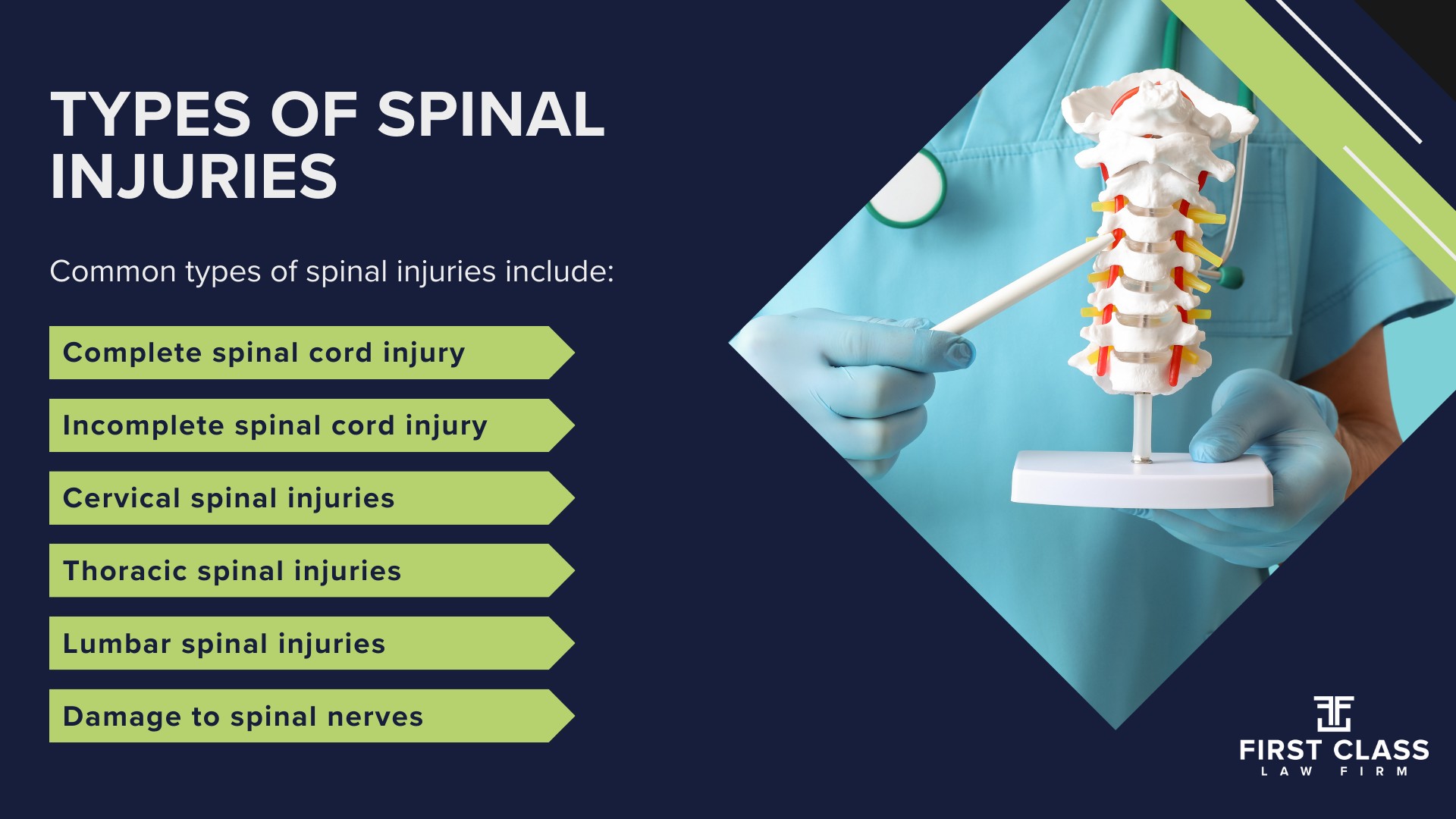
Common types of spinal injuries include:

  • Complete spinal cord injury โ€“ total loss of movement and feeling below the injury site
  • Incomplete spinal cord injury โ€“ some remaining function or sensation below the injury
  • Cervical spinal injuries โ€“ affecting the neck area and often resulting in quadriplegia
  • Thoracic spinal injuries โ€“ mid-back injuries that may impact torso and leg movement
  • Lumbar spinal injuries โ€“ lower back injuries often resulting in limited leg function
  • Damage to spinal nerves โ€“ affecting reflexes, sensation, or muscle control depending on the location

Each injury presents unique challenges, and the level of function preserved in incomplete injuries can vary greatly from person to person.

Proper diagnosis and early intervention are critical for long-term recovery and treatment planning.

Long-Term Impacts of Spinal Cord Injury

A spine injury can disrupt every major physical system in the body, particularly when the trauma involves damaged nerve signals or structural harm to the lumbar spine, soft tissue, or surrounding vertebrae.

A severe spinal cord injury often affects mobility, organ function, and the ability to complete routine tasks, especially when the damage leads to permanent paralysis or progressive neurological decline.

Even injuries that begin as a herniated disc or bulging discs can escalate into long-term complications when left untreated, creating issues that persist for years.

The long-term impact rarely stops at movement loss.

Many individuals require repeated surgeries, extended rehabilitation, and medical monitoring well into the subsequent years after the accident.

Loss of bowel and bladder control, sexual dysfunction, respiratory complications, and cardiovascular instability are common physiological consequences.

Individuals also face significant reductions in stamina, grip strength, and fine motor skills, making daily tasks far more difficult without structured physical or occupational therapy.

Chronic pain, neuropathy, and muscle spasms often emerge as the body attempts to compensate for impaired nerve pathways.

Emotional and psychological effects (such as depression, anxiety, and adjustment disorders) frequently develop as individuals adapt to major life changes and decreased independence.
Long-term effects of spinal cord injury may include:

  • Permanent paralysis, including paraplegia or quadriplegia
  • Loss of bowel control and bladder control
  • Sexual dysfunction and reproductive health complications
  • Chronic pain and muscle spasms
  • Nerve signal disruption affecting mobility and organ function
  • Increased risk of blood clots, pressure sores, and infections
  • Mobility limitations caused by lumbar spine damage, bulging discs, or herniated disc injuries
  • Dependence on mobility aids or in-home care
  • Reduced ability to return to work or maintain independence

Living with a spinal cord injury often requires consistent medical treatment and pain management, structural home modifications, and long-term financial planning.

With strong legal support, spinal cord injury victims can pursue the resources needed to stabilize their future and hold negligent parties responsible for the lifetime of challenges these injuries create.

The Legal Process for a Spinal Cord Injury Case in Georgia

In Georgia, spinal cord injury cases fall under the stateโ€™s personal injury laws, specifically O.C.G.A. ยง 51-1-6, which allows individuals to pursue legal action when theyโ€™ve been harmed by another partyโ€™s negligence.

Victims of spinal cord injuries have the right to obtain compensation for their losses, including ongoing medical costs, lost income, and pain and suffering.

Under Georgia’s modified comparative negligence rule (O.C.G.A. ยง 51-12-33), you can still recover damages as long as you are less than 50% at fault for the incident.

These cases often involve disputes with insurance companies, which may attempt to minimize payouts or deny claims altogether.

Because spinal cord injuries often result in long-term or permanent disability, itโ€™s important to build a case that fully reflects the injuryโ€™s impact.

Georgia law also imposes a two-year statute of limitations for filing most personal injury claims, meaning you must act quickly to preserve your rights.

Working with an experienced attorney helps ensure that all necessary evidence is gathered and deadlines are met.

A lawyer can handle negotiations with insurance adjusters and, if needed, take your case to court to secure full and fair compensation.
Here are the typical steps in a spinal cord injury case in Georgia:

  1. Free legal consultation โ€“ Review your case with a spinal cord injury attorney to understand your options.
  2. Investigation and evidence gathering โ€“ Collect medical records, accident reports, expert evaluations, and witness statements.
  3. Determine liability โ€“ Identify the at-fault party and establish negligence under Georgia law.
  4. Calculate damages โ€“ Assess total losses, including medical costs, lost wages, and long-term care needs.
  5. File a legal claim โ€“ Your attorney will file a complaint within the appropriate court jurisdiction.
  6. Negotiate with insurance companies โ€“ Attempt to reach a fair settlement without the need for trial.
  7. Litigate if necessary โ€“ If negotiations fail, your case proceeds to court for a judge or jury to decide.
  8. Receive compensation โ€“ If successful, youโ€™ll receive damages to support your recovery and future care.

Gathering Evidence for a Spinal Cord Injury Claim

Strong evidence shapes the strength of any spinal cord injury claim and determines what an injured person can recover.

Detailed records from medical professionals help show how you suffered injuries and how those injuries changed your life.

Physical evidence, documentation, and credible testimony give your legal team the foundation needed for holding negligent parties accountable.

Acting quickly allows your case to develop before key details fade, which is why you should seek immediate medical attention to begin putting the right documentation in place.
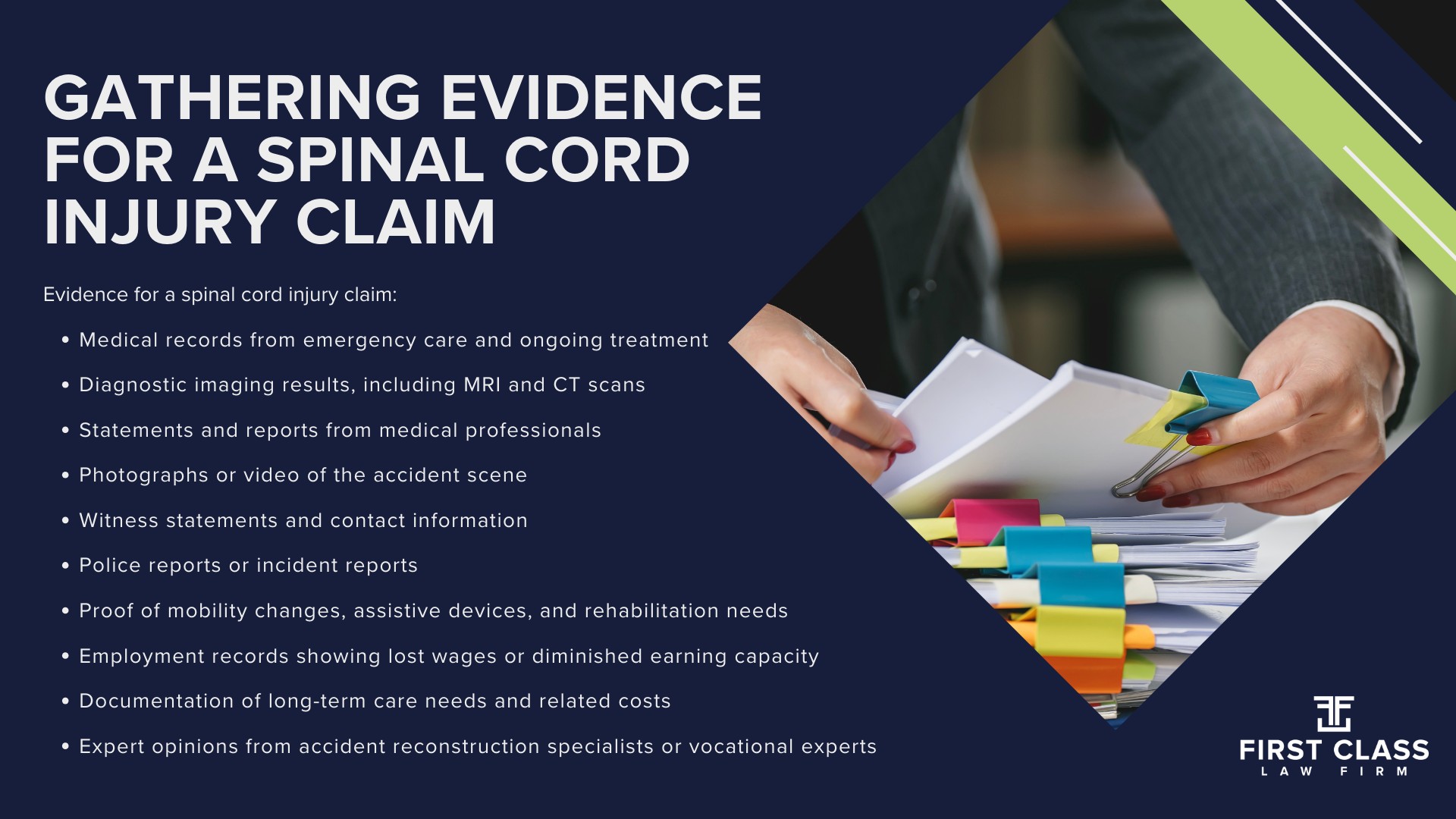
Evidence for a spinal cord injury claim:

  • Medical records from emergency care and ongoing treatment
  • Diagnostic imaging results, including MRI and CT scans
  • Statements and reports from medical professionals
  • Photographs or video of the accident scene
  • Witness statements and contact information
  • Police reports or incident reports
  • Proof of mobility changes, assistive devices, and rehabilitation needs
  • Employment records showing lost wages or diminished earning capacity
  • Documentation of long-term care needs and related costs
  • Expert opinions from accident reconstruction specialists or vocational experts

Damages in a Spinal Cord Personal Injury Lawsuit

A personal injury lawyer evaluates every consequence of a spinal cord injury to determine the full scope of harm and the level of financial compensation required to stabilize a victimโ€™s future.

In catastrophic injury claims, this analysis often begins with a detailed review of treatment records, first-year medical expenses, and the ongoing cost of physical therapy, rehabilitation, and long-term care.

A thorough accident investigation helps identify the responsible party, clarify how the incident occurred, and establish why they should be held accountable for the losses that followed.

These injuries frequently affect the lower body, mobility, and a personโ€™s ability to work, which can create financial and personal burdens that last for decades.

In severe cases, the cost of adaptive equipment, home modifications, and vehicle modifications becomes substantial, especially when a person cannot return to their prior level of independence.

Many families also face challenges navigating an insurance claim, which can delay treatment access or undervalue the true impact of the injury.

A strong legal strategy helps victims pursue maximum compensation, grounded in evidence showing how the injury changed their life on both economic and personal levels.

The goal is to recover just compensation that reflects medical needs, lost income, and the long-term financial support required for ongoing care.
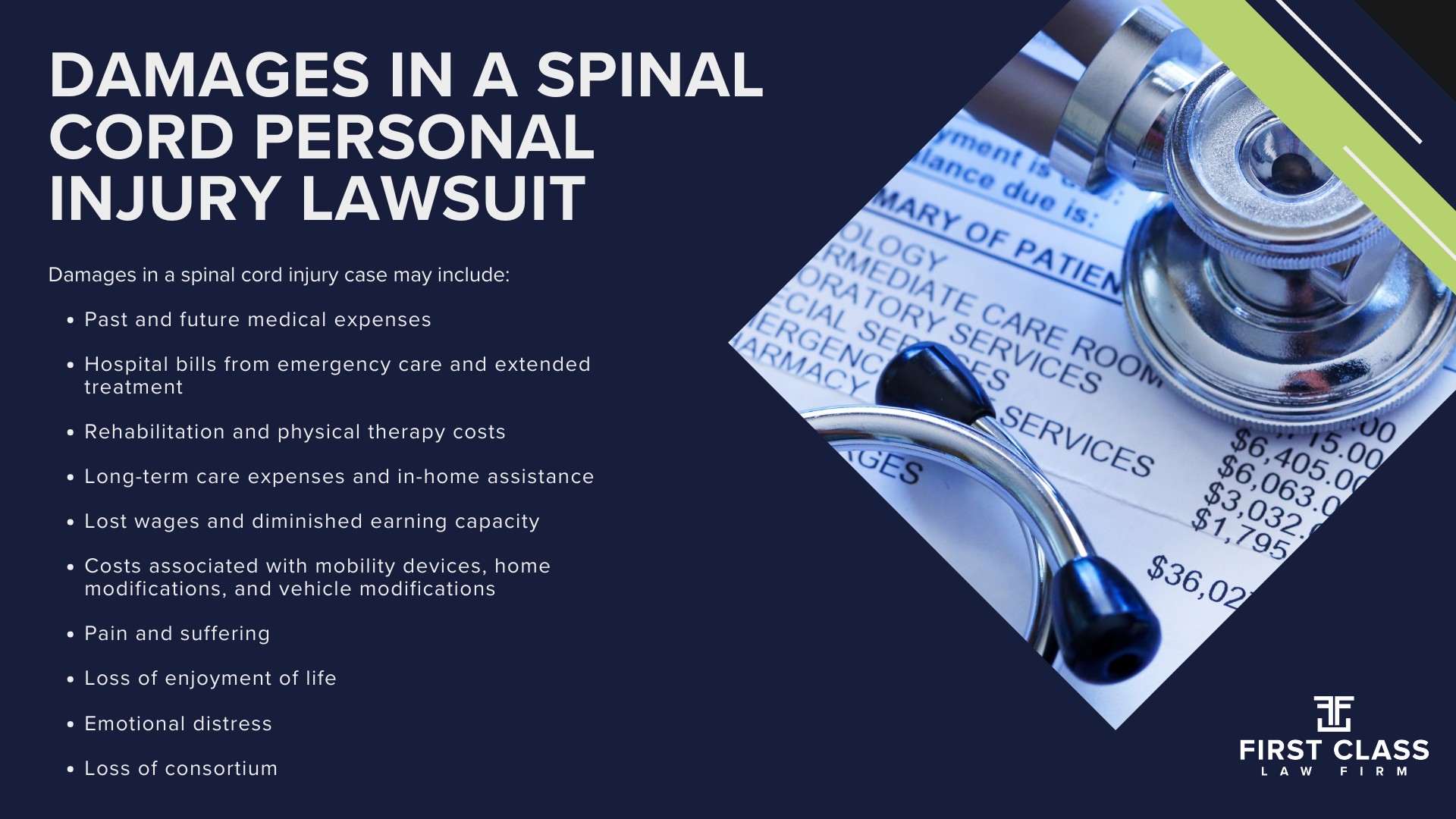
Damages in a spinal cord injury case may include:

  • Past and future medical expenses
  • Hospital bills from emergency care and extended treatment
  • Rehabilitation and physical therapy costs
  • Long-term care expenses and in-home assistance
  • Lost wages and diminished earning capacity
  • Costs associated with mobility devices, home modifications, and vehicle modifications
  • Pain and suffering
  • Loss of enjoyment of life
  • Emotional distress
  • Loss of consortium

A well-built claim provides the documentation needed to show the full impact of the injury and gives spinal cord injury victims a path toward meaningful recovery.

Do You Qualify for a Spinal Cord Injury Lawsuit?

Eligibility for a spinal cord injury lawsuit depends on whether another person, business, or entity caused the event that led to the injury.

A claim may exist if the injury resulted from a crash, fall, workplace hazard, unsafe property condition, or any other preventable incident rooted in negligence.

The facts of the accident, the severity of the spinal damage, and the medical documentation available all influence whether a case can move forward.

Victims often qualify when they can show that a duty of care was breached and that this breach directly caused measurable harm.

Medical records, imaging studies, and expert evaluations often provide the foundation needed to link the negligence to the injury.

Financial losses, long-term treatment needs, and changes in daily functioning also play a role in determining eligibility.

Families of individuals who cannot advocate for themselves may qualify to pursue a claim on their behalf.

Anyone uncertain about their rights can request a free case evaluation to understand their options and determine if legal action is appropriate.

First Class - The Atlanta Personal Injury Law Firm: Hire a Spinal Cord Injury Attorney Today

A spinal cord injury attorney at First Class โ€“ The Atlanta Personal Injury Law Firm provides direct, strategic guidance for spinal cord injury victims facing life-changing challenges.

These cases often arise from a car accident, medical malpractice, or another preventable incident that leaves a person with lasting physical and financial burdens.

Our approach focuses on the evidence, the required medical treatment, and the full scope of losses so clients can seek compensation with a strong legal foundation.

Insurance companies often minimize the value of these claims, which makes early legal help critical to protecting your rights and financial future.
If you or a loved one needs help after a spinal cord injury, contact First Class โ€“ The Atlanta Personal Injury Law Firm for a free consultation.

Our team is ready to review your situation, explain your legal options, and take the steps needed to pursue the compensation you deserve.


Frequently Asked Questions

  • How long do I have to file a spinal cord injury claim in Georgia?

    Georgia law generally gives injured individuals two years from the date of the incident to file a personal injury lawsuit, including claims involving spinal cord damage.

    This deadline applies whether the injury resulted from a car accident, a fall, medical malpractice, or any other negligent act.

    Some situations shorten or extend the timeframe, such as cases involving government entities or injuries discovered later through medical evaluation.

    Missing the deadline can bar a victim from recovering compensation, which is why early legal guidance is important.

    A spinal cord injury attorney can review the facts, determine the correct filing window, and help you take action within the required period.

  • What are the most common causes of spinal cord injuries?

    Spinal cord injuries occur in a wide range of preventable events, many of which involve someone elseโ€™s negligence.

    These incidents often create powerful forces or unsafe conditions that lead to serious trauma to the neck or back.

    Understanding the cause helps determine liability and guides the direction of a legal claim.

    Some of the most frequent causes include:

    • Car accidents and other motor vehicle collisions
    • Workplace incidents, including construction accidents
    • Falls from heights or slip-and-fall incidents on unsafe property
    • Acts of medical malpractice during surgery or diagnostic procedures
    • Sports-related impacts or recreational accidents
    • Workplace accidents involving heavy machinery or unsafe environments
    • Violent assaults or physical attacks

  • Can I file a spinal cord injury claim on behalf of a family member?

    Yes.

    In many catastrophic injury cases, a family member is allowed to take legal action when the injured person cannot speak for themselves or manage their own affairs.

    This often occurs when a negligent driver or another responsible party causes harm so severe that it permanently alters a personโ€™s life.

    Filing on their behalf protects their legal rights and preserves the evidence needed for a future claim.

    Experienced back injury lawyers can guide families through this process and help determine the best course of action.

  • How long does it take to resolve a spinal cord injury lawsuit?

    The timeline for resolving a spinal cord injury claim varies widely based on the severity of the injury, the complexity of the evidence, and how willing the opposing party is to negotiate.

    Cases involving paralysis, long-term treatment, or disputed liability often take longer because they require extensive medical documentation and expert evaluation.

    Insurance companies may also prolong the process by challenging the extent of the injury or the cost of future care.

    While some claims settle within several months, others (especially those involving substantial damages) may take a year or more to fully resolve.

  • What steps should I take before starting a spinal cord injury lawsuit?

    Preparing for a spinal cord injury lawsuit involves a few clear steps that help strengthen your case and protect your ability to recover compensation.

    Each step ensures that evidence is preserved and that your medical records accurately reflect the extent of your injuries.

    Taking action early gives your attorney the foundation needed to build a strong claim.

    The most important steps include:

    1. Get immediate medical evaluation and follow all recommended treatment
    2. Document the accident scene and gather any available witness information
    3. Save medical records, imaging results, and treatment summaries
    4. Keep track of lost income, mobility changes, and daily limitations
    5. Consult a spinal cord injury attorney to review your legal options

Written By:
Picture of Nathan Whittenburg

Nathan Whittenburg

Owner & Attorney - Atlanta Personal Injury Law Firm

Do You
Have A Case?

Our firm specializes in personal injury cases across the state of Georgia, working on a contingency fee basis to ensure the best possible service for each client.

Click below to get a free, instant case evaluation and find out if you qualify for legal action immediately.

Would you like our help?

About Atlanta Personal Injury Law Firm

Atlanta Personal Injury Law Firm specializes in personal injury cases across Georgia, including motor vehicle accidents, premises liability, catastrophic injuries, and wrongful death claims. Our experienced Georgia injury attorney works on a contingency fee basis, ensuring you only pay legal fees once we secure your settlement or verdict.

Contact our experienced legal team by phone or visit our website for a instant case evaluation. Trust Atlanta Personal Injury Law Firm for dedicated legal representation in Georgia.

Do You
Have A Case?

Our firm specializes in personal injury cases across the state of Georgia, working on a contingency fee basis to ensure the best possible service for each client.

Click below to get a free, instant case evaluation and find out if you qualify for legal action immediately.

Would you like our help?

Share

Related Posts

The #1 Personal Injury Lawyer in Atlanta, GA

Local Atlanta Resources

Education
Emergency Services
Courthouses
Department of Motor Vehicles
Community & History